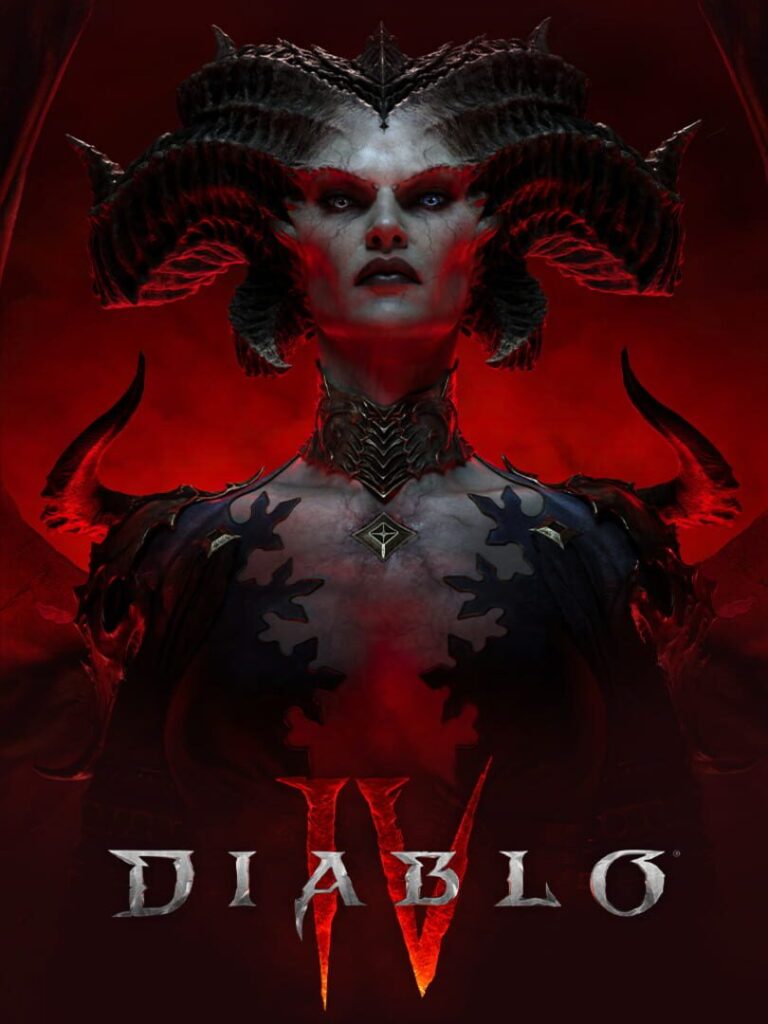

Diablo 4’s game director Zaven Haroutunian has said publicly that it is “normal” for most action RPGs to undergo major structural reworks, pointing to the friction points that only surface after players accumulate tens of thousands of hours in a live game.
The statement reframes how players should think about Diablo 4’s extended overhaul history — and raises a sharper question about what the live action RPG model actually costs its earliest adopters.
Published 21 March 2026. Source: PC Gamer — Diablo 4 game director interview. Diablo 4 is currently in active development with further updates expected.
What the Game Director Actually Said
Speaking to PC Gamer, Diablo 4 game director Zaven Haroutunian acknowledged the scale of changes the game has gone through since its June 2023 launch, describing the iterative process as an industry-wide reality rather than a Blizzard-specific failure.
“Friction points that we could never imagine suddenly rear their heads over the course of 10,000 hours,” Haroutunian said, referencing the cumulative playtime that dedicated players bring to a game after launch. The comment is a direct acknowledgment that no amount of internal playtesting replicates the pressure a live playerbase exerts on a game’s systems over time.
Haroutunian also admitted it is “really hard for players to keep up” with the ever-changing ARPG, particularly for players who are not tracking every update cycle in real time.
The Specific Changes Diablo 4 Has Undergone
Diablo 4 launched in June 2023 and has since had its core systems overhauled in four distinct cycles:
| Update Period | What Changed |
|---|---|
| 2023 (post-launch) | Sweeping balance updates to itemisation and class tuning |
| 2024 — Loot Reborn | Complete loot system overhaul; item power inflation addressed |
| 2024 — Vessel of Hatred expansion | New class, endgame content, further loot and progression revisions |
| 2025 | Major loot and combat overhaul; levelling system rework; higher level cap introduced |
The most significant structural restructuring came with the Loot Reborn update and continued through the Vessel of Hatred expansion in October 2024. The current build plays markedly differently from the version reviewed at launch — a fact that both veteran players and critics have noted at length.
The changes addressed player complaints about item power inflation, meaningful gear choice, and an endgame loop that felt like an obligation rather than an engagement. Haroutunian’s comments suggest Blizzard Entertainment views these overhauls not as a course correction from a flawed product but as an expected phase of live game development.
Why This Argument Holds Up — and Where It Has Limits
Haroutunian’s position is defensible. Path of Exile, one of the most respected action RPGs ever made, has undergone complete league mechanic overhauls and fundamental system rewrites across its decade-plus lifespan. Grinding Gear Games has reset league mechanics, reworked entire skill systems, and rebuilt the currency economy multiple times — always in response to how a deep playerbase actually interacted with those systems, not how internal testing predicted they would.
Last Epoch, from Eleventh Hour Games, launched in full in February 2024 and also shipped with acknowledged endgame systems that needed post-launch rework. The “live iteration is normal” argument has real genre precedent behind it.
Where it has limits: the argument conflates ongoing iteration with a product that shipped underbaked at a premium price. Diablo 4 launched at a high price point across PC and console, with a season pass structure that charged players additional money through a period when the foundational systems were still being rebuilt. Players who paid full price in June 2023 experienced a substantially weaker version of the game than those who picked it up after the major reworks. That is not a neutral outcome, and framing it as genre-normal does not make early adopters whole.
What This Means for SEA Players
For SEA players who came to Diablo 4 late — through regional sales, seasonal promotions, or at the Vessel of Hatred expansion launch — Haroutunian’s framing is more accurate to their experience. The version available now is the version that works. The rework history is largely invisible to anyone who did not play through it in real time.
For players who were there from June 2023 and paid full price through the rocky seasons, “this is normal” lands differently. That distinction is worth naming.
What Comes Next for Diablo 4
Haroutunian’s statement is also a forward signal. If major reworks are positioned as a standard feature of the live model rather than a failure state, Blizzard is indicating that more structural changes are likely — not just seasonal content additions, but overhauls of systems currently live. SERP coverage from 2026 also references a forthcoming expansion (referred to in community coverage as “Lord of Hatred”), which suggests the next major content and system revision cycle is already in progress.
For players invested in the present build, that context is useful: the itemisation systems, skill trees, and endgame loops you are engaging with now are working hypotheses. They will be revised when the next set of 10,000-hour friction points surfaces.
That is either reassuring or unsettling depending on your relationship with Diablo 4. Both readings are reasonable.
Diablo 4 is currently available on PC via Battle.net, PlayStation 5, PlayStation 4, Xbox Series X|S, and Xbox One. Regional pricing varies by storefront.
Source: PC Gamer — Diablo 4 game director Zaven Haroutunian interview; GamesRadar — “Diablo 4 game director admits it’s really hard for players to keep up”; GameSpot — Diablo 4 constant changes coverage