
Crimson Desert Developers Report Troubled Development and Management Culture at Pearl Abyss
By Marcus Tan
Two Pearl Abyss developers have gone on record to allege that Crimson Desert’s development was defined by a disorganised feature roadmap and a leadership culture that shut out critical feedback — claims published four days after the game’s March 19, 2026 launch, at which point Crimson Desert had already sold 2 million copies in its first 24 hours and was carrying a Metacritic score of 78.
At a glance:
– Release date: March 19, 2026 (PC, PS5, Xbox Series X/S)
– Sales: 2 million copies in first 24 hours
– Development timeline: approximately seven years
– Estimated development cost: 200 billion won (~$133 million USD)
– Metacritic score: 78
– Pearl Abyss stock: dropped approximately 30% in the days following launch
What the Eurogamer Report Reveals About Crimson Desert’s Development
According to a report published by Eurogamer on 22 March 2026, two developers who worked at Pearl Abyss described the game’s production as “a hodgepodge of features crammed together.” The posts originated on Blind — a verified industry-only platform where members must confirm their employer before posting — lending credibility to the anonymous accounts. Eurogamer translated the posts from Korean, noting that machine translation may have introduced minor errors.
The first developer alleged that Crimson Desert’s troubled state stems from a mid-development leadership change: a director was pushed out in a power struggle, and once a person from an art background became General Manager, the project’s direction collapsed. The post alleges that when The Legend of Zelda: Tears of the Kingdom released, the team “hurriedly followed and made sky island that makes no sense” — importing systems from other games without understanding why those systems worked in their original context. The story was reportedly not finalised until right before release, which is why, in the developer’s words, “there is no talk about the Crimson Desert in Crimson Desert.”
A Management Structure That Filtered Out Dissent
The second developer, who had since left Pearl Abyss, described the management hierarchy as “structured like an inverted pyramid, placing more leaders than rank-and-file employees.” In their words, leaders at Pearl Abyss “don’t acknowledge anyone who doesn’t share their exact mindset.”
“I believe most of my colleagues involved in development were aware that Crimson Desert was going off the rails,” the developer wrote. “However, I don’t think many were in a position to speak up about it.”
That kind of insularity is a documented accelerant for feature creep. Without honest internal feedback loops, poor design decisions do not get challenged early, and ideas from developers further down the chain get filtered out before they can make any difference. The second developer connects this directly to the control problems at launch: “Because it became such a hodgepodge of features crammed together, the control layout must have been a mess, too.”
Eurogamer’s Sources Remained Anonymous
Neither of the two developers was named in the report; both spoke on condition of anonymity via Blind. Pearl Abyss had not issued a public response to the development culture allegations at the time of writing.
Crimson Desert’s Track Record of Pre-Launch Turbulence
This is not the first controversy to follow Crimson Desert since launch. Earlier this month, Pearl Abyss drew criticism for using AI-generated art in the game’s promotional materials — assets the studio described as “early-stage iteration” that were unintentionally left in the final release. Before that, the studio committed to addressing control complaints after preview event feedback flagged significant issues.
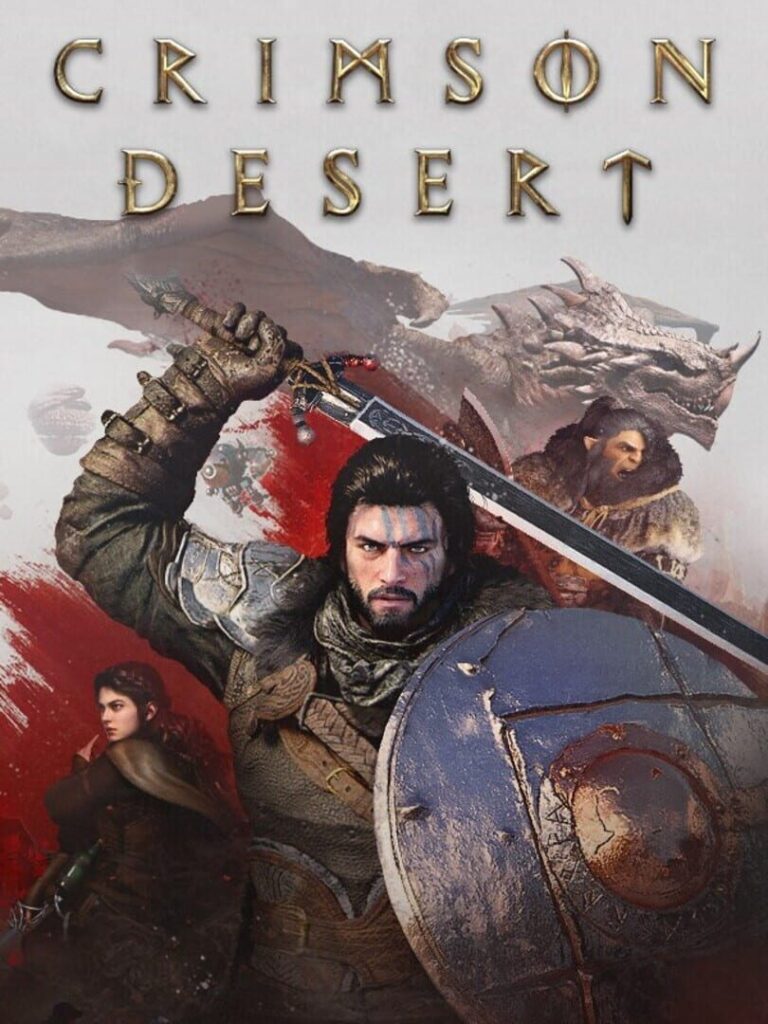
Crimson Desert is an open-world action RPG developed by Pearl Abyss — the South Korean studio behind Black Desert Online — and represents approximately seven years of development at an estimated cost of 200 billion Korean won. The game was originally showcased at The Game Awards and underwent what Pearl Abyss described as substantial design reworking after early player feedback.
Feature Creep: What It Actually Means for the Game
Feature creep — the tendency for long-development titles to accumulate systems without a clear mandate — has derailed high-profile games before. When individual leaders champion mechanics based on personal conviction rather than coherent design principles, the product ends up feeling scattered. The specific claim that the team copied The Legend of Zelda: Tears of the Kingdom sky islands without understanding the mechanic’s purpose is a concrete example of that pattern. Crimson Desert now includes a jetpack and firearms in a setting that originally presented itself as a grounded open-world action RPG — a visible sign of the “hodgepodge” the developer describes.
What SEA Players Should Know Right Now
Pearl Abyss has a substantial player base across Southeast Asia, driven largely by Black Desert Mobile. Crimson Desert peaked at 248,530 concurrent players on SteamDB in the days after launch — a commercially significant result — but the game’s reception has been more mixed in Korea than in Western markets, where critics awarded it a Metacritic score of 78. These developer accounts should recalibrate expectations rather than extinguish them: troubled development histories have preceded excellent shipped games before. Pearl Abyss has already committed to a controls patch and a full audit of AI-generated assets.
But the combination of factors is hard to ignore: a seven-year, $133 million project that launched without a finalised story, a 30% stock drop in days, recurring pre-launch controversies, and now insider accounts of an insular management culture on Blind. The correct position heading into any future Crimson Desert update is sceptical optimism.
Watch for Pearl Abyss’s official response to the Eurogamer report. If the studio addresses the development culture allegations directly, the nature of that response will reveal as much about the internal conditions as the claims themselves.
Source: Eurogamer