
A fresh Counter-Strike 2 patch landed on March 4, 2026, and whenever CS2 updates roll in, one question spikes again: what does Premier CS Rating actually mean—and why does it feel so volatile?
This explainer breaks down the CS2 Premier ranking system in plain English: what’s confirmed, what’s commonly observed by players, and how to climb with fewer wasted queues. (Valve has not publicly disclosed the full rating formula, so any “exact math” you see elsewhere should be treated as speculation.)
News peg: Valve’s official Steam News feed posted a Counter-Strike 2 Update on March 4, 2026 (see also the Steam News RSS feed for app 730).
What is Premier mode in CS2?
Premier is CS2’s flagship 5v5 competitive queue built around two things: a map veto/pick-ban phase and a single visible rating number called CS Rating.
Compared to standard Competitive, Premier is designed to feel closer to organized play: you’re not just “queuing a map,” you’re navigating a veto phase and then playing an MR12 match (first team to 13 rounds wins; overtime rules may apply depending on the mode and current settings).
Prime requirement: Premier typically requires Prime status to access in the official matchmaking environment, but requirements can change over time—check the Premier queue screen in-client for the current rule set.
CS Rating explained (and what it isn’t)
CS Rating is the visible number tied to Premier. It’s used for progression, match context, and (depending on the season structure) leaderboard positioning.
What it isn’t: a fully transparent, published Elo formula. Valve does not provide the public with the full details of how Premier rating is calculated—especially how it weighs opponent strength, uncertainty, streaks, or calibration.
Visible rating vs hidden matchmaking rating (MMR)
Most modern matchmaking systems use two layers:
- Visible rating (CS Rating): the number you see.
- Internal MMR (hidden): a behind-the-scenes estimate used to build fair matches.
Commonly observed behavior (not officially confirmed): when your visible CS Rating is higher than your “true” matchmaking level, you may notice smaller wins and bigger losses. When it’s lower than your internal level (or you’re newly calibrated), you may see bigger gains until the numbers converge.
The key takeaway: you climb by raising your team’s win probability—especially in high-impact rounds—more than by chasing personal stats.
CS2 Premier rating tiers/colors
Valve’s UI uses colors/bands to give a quick sense of where a rating sits. The exact labels and distribution can vary by region and season, but players commonly reference Premier tiers in 5,000-point bands like this:
| CS Rating (common band) | What it generally represents |
|---|---|
| 0–4,999 | Newer Premier players / early calibration |
| 5,000–9,999 | Developing fundamentals; inconsistent teamplay |
| 10,000–14,999 | Solid basics; growing utility and comms |
| 15,000–19,999 | Strong team structure; fewer “free” mistakes |
| 20,000–24,999 | High-level coordination and pacing |
| 25,000–29,999 | Very strong players; punishing opponents fast |
| 30,000+ | Elite; small errors get punished immediately |
Note: These bands are best used as a shorthand, not a promise of skill. Population shifts and season changes can move what “10k” or “20k” feels like.
How placements work (what we can confirm)
To receive (or refresh) a Premier CS Rating, players complete placement matches. The game client tracks your progress and indicates when your rating will be revealed.
What we can safely say without inventing numbers:
- You must play a set of matches before the game shows your initial/seasonal CS Rating.
- Early ratings can be volatile as the system calibrates.
- The exact number of placements (and whether it’s measured in wins vs matches) can change—follow your in-client placement tracker for the current requirement.
If you’re returning after a long break or a season shift, expect larger swings for a while. That’s normal calibration behavior in ranked systems.
Why your CS Rating gain/loss changes match to match
If you’ve ever asked “Why did I only get +X but lost -Y?” you’re not alone. While Valve doesn’t publish the algorithm, rating systems typically move points based on a few predictable ideas:
1) Opponent strength and expected win probability
Beating a team you were “supposed to beat” usually yields a smaller reward than beating a stronger team. Likewise, losing to a weaker team often costs more.
2) Calibration and streak correction
During periods where the system is less certain (fresh placements, long inactivity, big skill changes), it may adjust faster. Players also commonly observe that streaks can coincide with bigger swings—either because your internal MMR is moving quickly or because your match difficulty is changing.
3) Premier is still a team win/lose ladder
Even if personal performance is tracked and can affect the system’s confidence, your match result is the headline. In practice, the most reliable way to stabilize rating is to improve the rounds that decide games:
- Pistols
- Anti-ecos
- First gun rounds
- Post-plant and retake structure
If you consistently lose those “swing” rounds, you’ll feel it in your win rate—and the rating follows.
10 practical tips to climb faster in Premier
These are focused on what actually changes win probability in MR12 Premier matches.
- Win more pistol rounds (with a simple plan).
Pick one default per side: a fast five-man hit, or a 2-1-2 spread with clear trade rules. Pistols decide economy momentum more often than people admit. - Play trade-first CS (stop taking isolated duels).
Spacing wins games. If you entry, call it. If you’re second, be close enough to refrag instantly. - Lock in economy discipline.
Agree on force vs save rules early. A single “half-buy” round where everyone does something different bleeds multiple rounds of win probability. - Reduce solo-hero plays; increase info.
Your goal is to create “easy” rounds: early info, controlled map space, and coordinated hits—especially on T side. - Learn 2–3 high-impact utility lineups per main map.
Don’t learn everything. Learn the utility that wins site takes: one smoke, one flash, one molly that you can throw under pressure. - Build a comfort map pool instead of playing everything.
Premier’s veto phase rewards teams with depth, but for climbing, consistency matters. Being “A-tier” on 3 maps beats being “C-tier” on 7. - Queue in blocks—and stop after two losses.
Rating volatility punishes tilt. If you drop two in a row, take a break, review a round, and come back later. - Review one demo per session (10 minutes is enough).
Watch only your deaths and your utility. Ask: Was I tradable? Did I give my team info? Did I buy correctly? - Define roles in the first 30 seconds.
Who entries? Who lurks? Who anchors B? Who calls mid-round? You don’t need pro structure—just enough to avoid five people doing the same job. - Optimize for round impact, not K/D.
Sometimes the “best” play is surviving with utility, saving an AWP, or keeping two rifles for the next round. Those choices win matches—and rating follows.
Quick checklist to reduce rating volatility
- Don’t chase losses late at night
- Play with at least one comms-ready teammate when possible
- Pick maps you actually have defaults on
- Track pistol/anti-eco conversion rate (it’s a silent win rate killer)
Premier vs Competitive: the practical difference
If you’re deciding where to grind:
- Premier centers on one CS Rating and a veto phase; it’s the “main ladder” experience.
- Competitive tends to be more map-focused and is often used for warming up, learning maps, or lower-pressure games.
For pure improvement, the best answer is: learn fundamentals in Competitive, then test consistency in Premier.
What about cheaters, smurfs, and ‘unfair’ games?
They exist in every ranked ecosystem. Report suspicious behavior through the in-game tools, but don’t build your routine around exceptions. The fastest path up the ladder is still improving the controllables: trading, utility, economy calls, and tilt management.
What’s next
If Valve adjusts Premier seasons, matchmaking, or map pools in future patches, it can shift how “hard” a given CS Rating feels. Keep an eye on official Steam News posts for changes and re-check your in-client placement/rating screens after major updates.
Originally reported by: Valve (Steam News Hub / CS2 app 730 feed).
Related articles
- CS2 map pool updates: what changed and why it matters
- Best CS2 settings for competitive play (FPS + visibility)
- CS2 economy guide: force-buy rules that actually work
Sources: Steam News RSS feed (app 730) and the March 4, 2026 “Counter-Strike 2 Update” entry.
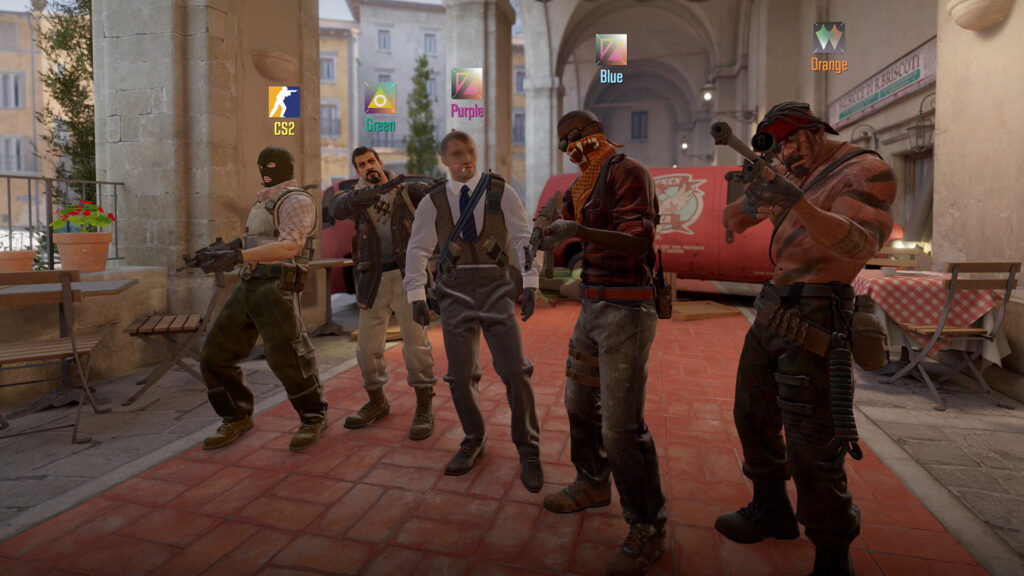
Featured image credit: Valve / Steam (Counter-Strike 2 Steam store screenshot asset). Source: Steam store page.