
Crimson Desert Review — Spectacular Combat, Stuttering Launch
Review at a Glance
| Score | 7/10 |
| Platform tested | PC (primary), PlayStation 5 |
| Developer | Pearl Abyss |
| Publisher | Pearl Abyss |
| Genre | Open world action RPG |
| Playtime | 38 hours (main story completed, majority of side content explored) |
| Review copy | Review code provided by Pearl Abyss |
Verdict: Crimson Desert delivers some of the most visually arresting combat spectacle in the open world action RPG genre, but its PC launch is a genuinely rough experience and its story loses its nerve precisely when it should be building to something.
Pros:
– Combat choreography and animation fidelity are genuinely exceptional
– World design rewards exploration with density that feels earned, not padded
– Boss encounters are memorable set-pieces with distinct telegraphing patterns
– PlayStation 5 version runs cleanly at 60fps in Performance mode throughout
– Side content respects your time — no filler fetch quests bloating the runtime
Cons:
– PC stuttering at launch is severe enough to disrupt combat timing on mid-range hardware
– Story pacing collapses in the mid-section; three-act structure never recovers momentum
– English localisation in key cutscenes is noticeably weak, flattening emotional beats
– No NG+ at launch — a meaningful gap for an action RPG at this price point
– Open world traversal feels slightly underpowered compared to the combat system’s ambition
The moment that stuck with me — around hour six, fighting a corrupted warlord on a crumbling clifftop while the sky turned a bruised amber — was when Crimson Desert stopped feeling like a promise and started feeling like an argument. Pearl Abyss has spent years building Black Desert Online into one of the most visually sophisticated MMORPGs in the world. With Crimson Desert, the studio is making the case that those tools can anchor a full single-player experience. In that moment, cliffside, watching the warlord’s armour shatter across three staggered hit animations, the argument was persuasive.
Forty-eight hours later, after two crashes during a mid-game story sequence and a stuttering boss fight that I had to reload because the frame drops broke my parry timing, the argument feels more complicated.
This is a review of Crimson Desert (Pearl Abyss, released 19 March 2026) on PC and PlayStation 5. The review below reflects 38 hours of play across both platforms.
Gameplay and Combat — Where Crimson Desert Earns Its Score
Crimson Desert is an open world action RPG built around a weapon-arts system that chains light attacks, heavy attacks, and skill-slot abilities into context-sensitive combos. The protagonist, Macduff, accumulates Fury during combat — a secondary resource that unlocks enhanced versions of each ability when the gauge fills. It sounds mechanical on paper. In practice, it produces combat that reads fluidly and rewards aggression without making enemies feel like punching bags.
The parry system is the combat loop’s backbone. Every significant enemy has a parry window — a brief amber flash on impact — and landing it staggers them into a follow-up that deals disproportionate damage. Missing the window punishes you with a stamina drain. After roughly ten hours, reading these windows becomes second nature, and the game opens up considerably. The dodge cancel mechanic — which lets you interrupt the recovery frames of heavier abilities — adds a layer of depth that most players will discover accidentally and then never stop using.
What Works in Combat
- Boss encounters are the highlight. Each of the seven major bosses (through 38 hours) has a distinct moveset with three-phase escalation and at least one genuinely surprising ability transition in the final phase.
- The weapon variety across Macduff’s unlockable arts tree is substantial. Switching between sword stances, spear extensions, and chain-sickle modes changes the feel of fights meaningfully rather than cosmetically.
- Enemy AI scales well with difficulty settings. On the default setting, combat is demanding without being punishing. On Veteran difficulty, the parry windows tighten noticeably.
What Doesn’t Work in Combat
- The lock-on system struggles in multi-enemy encounters, particularly against fast-moving archers positioned above you. Manual camera adjustment during these fights breaks the rhythm the game otherwise maintains.
- Stamina management feels arbitrary in the early game before you understand which abilities drain it. The tutorial communicates this poorly.
Story and Characters — A Narrative That Runs Out of Road
Macduff is a mercenary captain whose company is massacred in the game’s opening act, setting him on a path of vengeance through the fractured kingdoms of the Pywel continent. The setup is familiar; the execution in the first act is better than familiar. The supporting cast — particularly Macduff’s surviving lieutenants, Sigrid and Yenlan — give the early hours genuine texture. There are relationships here that feel like they matter.
The problem arrives around the fifteen-hour mark, when the game pivots from personal stakes to a wider political conflict involving three warring factions. The writing becomes functional rather than felt. Sigrid, who drives almost every emotionally resonant moment in the first act, disappears for long stretches. The faction politics are not interesting enough to fill that space. By the time the story attempts to return to its personal register in the third act, the emotional groundwork has been neglected for too long.
The English localisation makes this worse in specific cutscenes. Certain exchanges — particularly the confrontation at the end of the second act — read as literal translations that lost their rhythm in transit. The performances of the voice cast are game enough, but they’re working with dialogue that doesn’t always give them the material they need.
The bones of a genuinely affecting story are here. Pearl Abyss had the character work to support it. The studio’s decision to expand the scope in the mid-section was the wrong call.
PC Performance — The Honest Picture
Most launch reviews of Crimson Desert assessed the game primarily on PlayStation 5 and gave PC performance a paragraph. That is not sufficient for a game where PC stuttering has been the dominant community complaint since day one.
According to Digital Foundry’s PC performance analysis published at launch, Crimson Desert uses DirectX 12 and compiles shaders in the background during the first two to four hours of play. On high-end hardware — RTX 4080 and above — this process is largely invisible. On mid-range hardware in the GTX 1080 Ti to RTX 3070 range, shader compilation creates significant frame-time spikes that manifest as hitching during combat. These are not drops from 60fps to 50fps. They are drops from 60fps to sub-20fps lasting half a second or longer, which is long enough to cause missed parry windows.
I tested on a system running an RTX 3060 Ti with 16GB RAM — hardware that sits comfortably above minimum spec and within the recommended range. On Ultra settings at 1080p, the first three hours produced hitching severe enough to kill three separate boss attempts. Dropping to High settings reduced but did not eliminate the problem. Setting textures to Medium brought the stuttering under control after approximately ninety minutes of background compilation.
This matters for SEA players specifically. The RTX 3060 and 3060 Ti are among the most common GPUs in the Malaysian and Indonesian PC gaming markets, according to Steam hardware survey data from February 2026. A launch-day experience that actively degrades combat on those cards is a significant issue that the game’s marketing did not communicate.
The PlayStation 5 version has no equivalent problem. In Performance mode, Crimson Desert runs at a stable 60fps with only minor resolution scaling during the most particle-heavy boss phases. If you have a choice of platform and performance stability matters to you, PS5 is the better choice right now.
Pearl Abyss has acknowledged the PC stuttering in a statement posted to their official site and indicated a patch is in development, but no timeline has been confirmed.
Visuals and Audio — Pearl Abyss Doing What Pearl Abyss Does Best
The visual direction is the clearest argument that Pearl Abyss was the right studio to make this game. The Pywel continent is built around a dark-fantasy palette that never tips into the grey-brown monotony that afflicts the genre. Forests have genuine colour. Ruins catch light in ways that reward stopping and looking. The character model fidelity — particularly in close-up cutscenes — is exceptional, and the cloth and armour simulation during combat is among the best in the current generation.
The audio design is similarly strong. The combat sound mix gives weight to heavy hits without overloading the soundscape during multi-enemy fights. The score, composed primarily for strings and low brass, fits the setting without drawing attention to itself — which, for this genre, is exactly what you want. The main theme that plays during the game’s best boss encounter is the one moment the score tries something more ambitious, and it lands.
Value, Longevity, and SEA Pricing
The main story runs approximately 25 to 28 hours at a moderate pace. Add side content — which is consistently well-designed and avoids padding — and the realistic completion window is 40 to 50 hours for thorough players. There is no New Game Plus mode at launch, which is a genuine miss for a game whose combat system rewards mastery. Pearl Abyss has not confirmed whether NG+ will be added post-launch.
There is no multiplayer or co-op component. Crimson Desert is a wholly single-player experience.
Check the Steam Malaysia store page for current MYR pricing before purchasing. Regional pricing varies by storefront. On PlayStation 5, check the PlayStation Store Malaysia for local pricing. At full price, the value proposition depends heavily on which platform you play it on. On PS5, 40-plus hours of polished, visually spectacular action RPG combat is reasonable value. On PC at launch, the performance caveats complicate that calculation — though a post-patch PC version may read differently.
Verdict
Crimson Desert is the most technically ambitious open world action RPG Pearl Abyss has released, held back by a story that loses its thread in the second act and a PC launch that genuinely needed more time.
On PlayStation 5, it is a good game with a flawed story. The combat is exceptional — as mechanically satisfying as anything in the genre right now, with boss design that will stick with you. The world is worth exploring. The narrative disappointment is real but does not undermine the experience enough to recommend against it.
On PC at launch, the recommendation comes with caveats large enough to matter. If you are on mid-range hardware and you play action RPGs for the precision of the combat loop, the shader compilation stuttering on day one may genuinely frustrate you. Wait for the patch confirmation before committing at full price.
Pearl Abyss built something ambitious here. The studio’s craft is visible in almost every frame. The uneven story and the staggered launch execution are what separate a good game from a great one.
Crimson Desert: 7/10
A visually and mechanically exceptional action RPG that stumbles in its second act and arrives on PC in a state that mid-range hardware owners will find hard to forgive at launch.
Frequently Asked Questions
Is Crimson Desert worth buying in 2026?
On PlayStation 5, yes — the combat system is exceptional and the world design rewards the time you put in, despite a weak second act. On PC, wait for Pearl Abyss to patch the shader compilation stuttering before purchasing if you are on mid-range hardware (RTX 3060 to 3070 range). Full story runs 25 to 28 hours; 40-plus with side content.
How long is Crimson Desert?
The main story takes approximately 25 to 28 hours at a moderate pace. Completing the majority of side content — which is consistently well-designed — extends this to 40 to 50 hours. There is no New Game Plus mode at launch.
Is Crimson Desert on PS5?
Yes. Crimson Desert is available on PlayStation 5, Xbox Series X|S, and PC. The PlayStation 5 version runs at a stable 60fps in Performance mode and is the recommended platform if PC performance is a concern at launch.
Does Crimson Desert have multiplayer or co-op?
No. Crimson Desert is a single-player-only experience. There is no multiplayer, co-op, or online component in the launch version of the game.
How does Crimson Desert compare to Black Desert Online?
Crimson Desert shares Black Desert Online’s visual engine and character animation fidelity, but the two games are structurally different. Black Desert Online is a persistent online MMO with player-versus-player focus; Crimson Desert is a fully offline single-player narrative action RPG. The combat DNA is recognisably Pearl Abyss, but the progression systems and content structure are distinct.
What are the PC specs needed to run Crimson Desert without stuttering?
Pearl Abyss lists an RTX 3060 Ti as recommended. Based on testing, mid-range cards in the RTX 3060 to 3070 range experience significant shader compilation stuttering in the first two to four hours on recommended or Ultra settings. Dropping to High or Medium texture settings reduces the problem. A patch addressing the shader compilation is in development according to Pearl Abyss, but no release date has been confirmed as of 19 March 2026.
Reviewed on PC (RTX 3060 Ti, 16GB RAM, Windows 11) and PlayStation 5. Review period: 12–18 March 2026. Review code provided by Pearl Abyss.
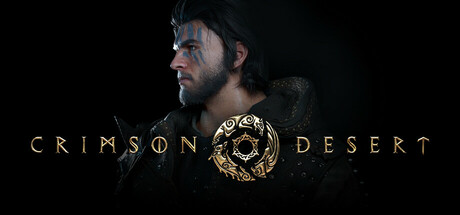
Image: Pearl Abyss