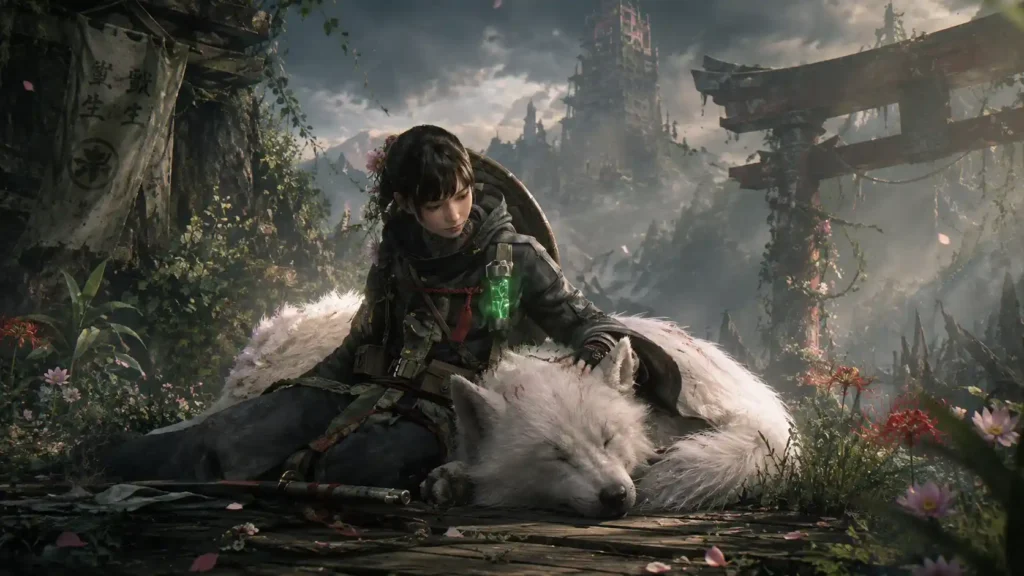
Capcom’s monster-taming spin-off has quietly been Pokémon’s scrappier, more dangerous cousin for three games now, and this time it finally stopped feeling like a side quest. GamesHarbour breaks down what Monster Hunter Stories 3: Twisted Reflection actually delivers, its story, its Monsties system, how critics received it, and whether the jump from Standard to Deluxe or Premium Deluxe Edition is worth the extra cost.
What Is Monster Hunter Stories 3?
Monster Hunter Stories 3: Twisted Reflection is the third entry in Capcom’s turn-based RPG spin-off series, and the one that finally makes riding a Rathalos feel like the main event instead of the side dish. The Monster Hunter Stories 3 release date was March 13, 2026, and the game launched simultaneously on Nintendo Switch 2, PlayStation 5, Xbox Series X|S, and PC, no staggered console rollout, no waiting a year for the “good” version. Unlike the mainline Monster Hunter games, which task you with hunting monsters down, the Stories series flips the script entirely: you tame them, ride them, and bring them into battle as loyal companions called Monsties.
Monster Hunter Stories 3 Story and Characters
The stage is set across two rival kingdoms, Azuria and Vermeil, both staring down the same slow-motion apocalypse: a phenomenon called the Crystal Encroachment that’s quietly strangling habitats across the world. At the center of it all is Eleanor, a young Rider whose fate gets tangled up with something the series has never done before, a rare Twin Rathalos, hatched from the same egg, bonded to her from birth. It’s the kind of premise that could easily tip into melodrama, but reviewers say it doesn’t.
Eleanor doesn’t walk this world alone. A colorful cast tags along for the ride:

- GaulSub-captain of the Rangers, rarely seen without his Felyne companion Murray
- OgdenLess a person and more a walking encyclopedia, literally nicknamed the “walking Monsterpedia” in-game
- KoraCo-founded the Rangers alongside Amara, Eleanor’s own mother
- RudyA Palico carrying generations of royal service in his blood, and important enough to earn his own side-story DLC
Multiple critics singled out the Monster Hunter Stories 3 characters and story writing as a genuine step up for the series, and they didn’t hold back the praise. OpenCritic’s review roundup called it “the best entry in the Stories series to date,” while Metacritic reviewers described it as having “a much more mature story than its predecessors,” finally shaking off the old label of being “merely a spin-off.”
Monster Hunter Stories 3 Gameplay: Monsties and Taming
At its heart, the Monster Hunter Stories 3 Monsties system is what keeps players glued to their screens at 2am telling themselves “one more egg.” Hatch, raise, battle, repeat it’s a loop as old as monster-collecting games themselves, but OpenCritic’s review says Capcom nailed the rhythm of it here, calling it “a finely-tuned loop of hunting, hatching, restoring, and upgrading that perfectly, joyfully feeds into itself every step of the way.”
What sets this entry apart is habitat restoration, a system that ties the game’s ecological stakes directly into how you actually play. It’s a little contradictory by design, and one Metacritic critic called that out directly, noting the game “assumes its paradox fully: it defends an ecological discourse on the balance of ecosystems while encouraging the player to chain fights to progress.” Rather than treating that tension as a flaw, the critic framed it as “almost an identity” for the game.
Bring snacks. One OpenCritic reviewer clocked over 60 hours just finishing the main story, and multiple critics agree the game is built to swallow hundreds more hours for anyone who falls into its endgame monster-collecting spiral.
Character Creator and Customization
Before Eleanor ever sets foot outside the Rangers’ base, you get to decide what she looks like: body type, hairstyle, skin color, all adjustable in a full character creator at the start of the game. And unlike a lot of RPGs that lock your look in the moment you hit “confirm,” Twisted Reflection lets you circle back and tweak her appearance later from the Rangers’ base as the story unfolds.
Monstie Genes and Breeding, Explained
Collecting Monsties is only half the game. The real rabbit hole is genes, a customization system deep enough to swallow a weekend. Each Monstie carries up to nine gene slots, pulled from a pool of more than 500 possible genes spanning active combat abilities and passive skills tied to specific attack types and elements. Min-maxers, this is your playground.
Two paths get you there:
- ◆Rare egg hunting: eggs pulled from Rare (yellow) and Super Rare (blue) Monster Dens carry better odds of hatching a Monstie with strong starting genes
- ◆Rite of Channeling: unlocked a few hours into the story, this system lets you transplant genes between two Monsties directly, stripping the good stuff off a spare and grafting it onto your favorite, without losing either creature for good
There’s a third layer tying it all together: Habitat Restoration. Release a spare Monstie back into its home region and you raise that region’s Ecosystem Rank, which quietly improves the odds of finding dual-element Monsties and rare mutated variants in that area going forward. It’s a noticeably kinder system than the series’ older breeding mechanics, where sacrificing a Monstie permanently used to be the price of progress. Not anymore.
Monster Hunter Stories 3 Battle System
Combat still runs on the series’ signature rock-paper-scissors triangle, where attack types counter each other in a loop as old as the franchise itself, but Twisted Reflection isn’t content to just recycle it. New layers of tactical depth sit on top of that familiar base, and reviewers keep pointing to combat as one of the game’s strongest pillars, praising it for having “added strategic depth” compared to previous entries.
Not every review was glowing on execution. Some players and critics reported FPS drops, occasional crashes, and the absence of a multiplayer mode as genuine drawbacks, even within otherwise positive reviews.
Which Platform Should You Play Monster Hunter Stories 3 On?
This is the first entry in the series to launch simultaneously across every major platform, and no, they don’t all play the same.

| PS5 and Xbox Series X|S | Nintendo Switch 2 | PC and Windows Handhelds |
|---|---|---|
| Both hand you three selectable graphics modes, performance, balanced, and quality, letting you trade resolution and shadow quality for frame rate however you like. PS5 wins the polish contest here, comfortably holding 60 FPS in performance mode. Xbox Series S looks good on paper, nearly matching PS5’s settings, but struggles more to actually hold that frame rate once things get busy on screen. | Gets exactly one display mode, take it or leave it, in both docked and handheld play. Frame rates hover around 30fps during exploration and spike higher mid-combat, but multiple outlets flagged choppy frame pacing as a genuine issue, with handheld mode dipping below 30fps more often than anyone would like. | A coin flip depending on what you’re running. RPG Site tested it on a ROG Ally and found it couldn’t even hold a steady 30fps on the default high preset without upscaling help, FSR at balanced plus lowered shadows was needed just to land a decent 1080p handheld experience. A beefy desktop PC will blow every console out of the water, but don’t expect an underpowered Windows handheld to carry this one gracefully out of the box. |
Monster Hunter Stories 3 Review: Critical Reception
Twisted Reflection isn’t just good, it’s the best-reviewed Stories game Capcom has ever put out. Metacritic scores are clustering in the low-to-mid 80s across platforms, PlayStation 5 around 86, Nintendo Switch 2 around 82, comfortably inside “generally favorable” territory. OpenCritic likes it even more, handing down an aggregate score of 85 from 131 critics, earning a “Mighty” badge and a spot in the top 5% of everything the site has ever scored.
| Source | Score |
|---|---|
| Metacritic (critics) | 85/100 |
| Metacritic (PS5) | ~86 |
| Metacritic (Switch 2) | ~82 |
| Metacritic (users) | 8.1/10 |
| OpenCritic | 85, “Mighty,” top 5% |
The critical consensus reads almost like a chorus: heavy praise for the story, the characters, the monster-collecting loop, the combat’s added depth. The complaints, where they exist, cluster around two things, some technical rough edges (FPS drops, the occasional crash) and the total absence of multiplayer, a feature longtime fans of the series didn’t expect to lose.
Monster Hunter Stories 3 vs Stories 2: What Actually Changed
Thinking about upgrading from Monster Hunter Stories 2: Wings of Ruin? It’s not the clean-cut victory for the sequel you might assume.
Where Stories 3 pulls ahead:
- ◆Noticeably sharper graphics and moment-to-moment presentation
- ◆A reworked combat system that slaps a stamina cost on weapon skills and Monstie commands, killing the old habit of button-mashing your way through fights
- ◆Smarter, more genuinely useful AI-controlled party members, a change players and critics both flagged unprompted
- ◆A story and cast that finally reads as mature rather than merely serviceable
Where Stories 2 still has the receipts:
- ◆Years of post-launch content updates gave Stories 2 a late-game and post-game depth that Stories 3 simply hasn’t had time to build yet
- ◆Fans keep pointing out one specific absence: no infinite dungeon mode, a feature Stories 2 eventually earned, is missing from Stories 3 at launch
- ◆If endgame grinding matters more to you than story polish, some players argue Stories 2’s fatter content library still wins on raw value
Worth sitting with before you decide: Stories 3 wins on nearly everything you’d judge a game on at launch better reviews, better visuals, better writing but Stories 2’s years of accumulated content mean it hasn’t been rendered obsolete overnight. Give Stories 3 the same runway, and that gap probably closes on its own.
Monster Hunter Stories 3 Editions, Price, and DLC
Twisted Reflection shipped in three flavors, and the difference between them is more than just packaging:
| Edition | Price | Contents |
|---|---|---|
| Standard Edition | $69.99 | Base game |
| Deluxe Edition | $89.99 | Base game + Deluxe Kit (Additional Side Story: Rudy, layered armor set, monster hair options, Rudy outfits) |
| Premium Deluxe Edition | $99.99 | Everything in Deluxe Edition + an additional cosmetic DLC pack (more layered armor, monster hair, and Rudy outfits) |
Pre-order any edition and you’ll walk away with a bonus Layered Armor set for Eleanor, the “Skyscale Queen” set, ready to unlock once your progress catches up to it.
The real prize hiding in the Deluxe and Premium Deluxe editions is Additional Side Story: Rudy, the headline Monster Hunter Stories 3 DLC, a story-focused expansion digging into Rudy’s family history as Azurian Royal Palicoes. It’s not available at launch; it’s slated for Autumn 2026, and you’ll need to clear roughly the first half of the main campaign before it unlocks. Bought the Standard Edition and had second thoughts? No need to buy the whole game twice; the Deluxe Kit is available on its own for $24.99.
Pros and Cons
Here’s a quick breakdown of where critics and players consistently agreed the game succeeds, and where it falls short:
- ✓A significantly more mature, better-written story and cast than previous Stories entries
- ✓A deep, genuinely rewarding Monstie genes and breeding system
- ✓Combat that adds real tactical weight through the new stamina system
- ✓More effective, less frustrating AI party members
- ✓Strong critical consensus, landing in OpenCritic’s top 5% of all scored games
- ✕Occasional FPS drops and crashes on some platforms
- ✕No multiplayer mode, a feature some longtime fans expected
- ✕A comparatively thinner endgame at launch versus Stories 2’s years of accumulated post-launch content
- ✕No infinite dungeon mode at launch, unlike Stories 2’s eventual endgame structure
Is It Worth Playing?

Monster Hunter Stories 3: Twisted Reflection isn’t just the best Stories game Capcom has made; it’s the one that finally proves the spin-off deserves to stand on its own. Story, characters, combat depth, that genuinely addictive gene-breeding loop, it all lands. The rough edges are real too: the occasional FPS stutter, a crash here and there, no multiplayer, and an endgame that hasn’t caught up to Stories 2’s years of accumulated content. None of that stopped critics from parking this in OpenCritic’s top 5%.
New to the series? Standard Edition gets you the whole core experience. Coming back for Rudy’s story and some extra flair? Deluxe beats Premium Deluxe on value every time. And if a deep, grindable endgame matters more to you than a tighter, better-told story, it’s fair to say Stories 2 hasn’t lost that fight just yet.