
Every new ADC player gets the same advice: “stay back,” “don’t die,” “just farm.” None of that tells you what to actually do with your mouse and keyboard when a fight starts. GamesHarbour built this League of Legends ADC guide around the mechanics and decisions that actually separate a bot laner who feeds every game from one who carries: how to read distance in a fight, how to move while attacking, and how to pick champions that teach you the right habits instead of bad ones.
What Does ADC Mean?
ADC stands for Attack Damage Carry. It’s the marksman role usually played in the bot lane, paired with a support champion for protection and lane control. Unlike most other roles, ADC damage comes overwhelmingly from basic attacks rather than abilities, which means an ADC’s power scales almost linearly with the items in their inventory rather than their character level alone.
That scaling comes at a cost: most ADCs have low base health and no reliable escape tools built into their kit. This creates the defining tension of the role. You do enormous, consistent damage from range, but a single mistimed step forward can end your game in one ability combo. Everything in this guide exists to manage that tension.
How to Position as ADC: The Three-Zone System
Forget “stay back.” That phrase doesn’t tell you how far back, or from what. Instead, think of every fight as three overlapping zones of danger, and constantly ask yourself which zone you’re standing in.
| The Safe Zone | The Threat Zone | The Dead Zone |
|---|---|---|
| You’re at your maximum auto-attack range, with your frontline or support between you and the enemy team. Nothing can reach you here without using a dash, hook, or flash. | You’re within range of an enemy dash, hook, or gap-closer, but you still have time to react if you’re paying attention. This is where most ADC deaths actually start, not because the enemy engaged, but because the ADC didn’t notice they’d drifted into this zone until it was too late. | You’re inside burst or crowd-control range with no realistic way out. If you find yourself here, your only job is damage mitigation, using any defensive summoner spell or item you have left, because you likely can’t escape cleanly. |
The skill isn’t reacting well once you’re in the dead zone. It’s noticing the moment you cross from the safe zone into the threat zone and correcting your position before the fight punishes you for it.
Before every fight, take a few seconds to identify which enemy champions can move you between zones instantly, engage supports, junglers with gap closers, and assassins, since those are the threats that skip you straight past the threat zone into the dead zone.
How to Kite in League of Legends
Kiting, also called orb walking or attack-moving, is the technique of dealing damage while retreating, and it’s the single highest-leverage mechanical skill an ADC can build.
Here’s why it works: when you auto attack, the damage is actually applied partway through the attack animation, not at the very end. That means you don’t need to wait for the full animation to finish before moving; you can cancel the leftover part of the animation with a new command the instant the damage has landed.
The default way to do this is the attack-move command, bound to the “A” key by default. Instead of right-clicking an enemy to auto attack, you press A and then click near the target. Your champion will automatically attack anything in range, and as soon as the attack fires, you can immediately issue a new move command to start repositioning before the animation would have naturally ended.
A practical way to learn it:
- Load into a custom game or the Practice Tool and find a minion wave or a training dummy
- Press A, then click on the target to auto attack it
- The instant you see your champion’s attack fire, click a spot away from the target to move
- Repeat: attack, move, attack, move, keeping your champion always slightly out of the target’s effective range
Start slow on a single champion until the rhythm feels automatic before trying to kite in a real match. Attack speed items make the timing more forgiving, so kiting will feel noticeably smoother as your build comes online in the mid-game.
CS and Farming: The Habit That Funds Everything Else
Kiting and positioning keep you alive, but CS (creep score) is what actually turns you into a threat. Every item in this guide’s later sections is paid for by minions you kill in lane, not by kills you get in fights.
Rather than chasing a single fixed number, benchmark yourself against CS per minute (CS/min) for your current rank, since that scales more fairly across different game lengths than a fixed “CS at 10 minutes” target:
| Rank | CS per minute |
|---|---|
| Iron-Bronze | 3-5 |
| Silver | 4-6 |
| Gold | 5-7 |
| Platinum | 6-8 |
| Emerald | 7-8.5 |
| Diamond | 7-9 |
| Master+ | 8-10+ |
These figures come from general solo-lane benchmarks, and bot lane’s shared-lane dynamic with your support means your personal number may run slightly below a true solo laner’s at the same rank, so treat the table as a directional target rather than an exact quota.
CS/min is a more honest signal than most stats in your match history because it barely depends on your team or luck, and it compounds every minute of the game. A rough rule of thumb: roughly every 14 minions farmed is worth about the same gold as one kill, which means a quiet 15-CS lead over your lane opponent can matter as much as a kill you never had to risk taking
Best ADC Champions for Beginners
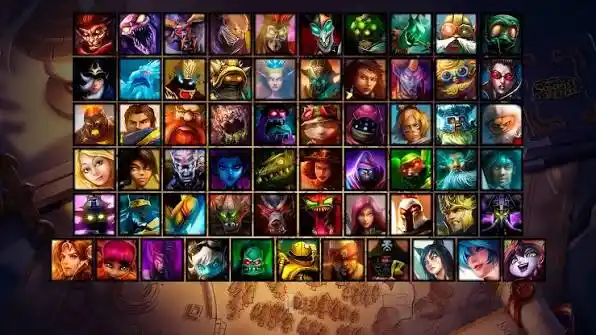
The goal with your first champion pool isn’t picking whoever’s strongest this patch; it’s picking champions whose kits force you to practice the fundamentals above without punishing small mistakes too harshly.

| Champion | Core habit it builds | Why it’s forgiving |
|---|---|---|
| Ashe | Kiting, since her passive slows anything she auto-attacks, making it easier to keep distance | Simple, low-cooldown kit with a long-range global ultimate that lets you contribute even from a mistake-heavy lane |
| Miss Fortune | Reading fight timing, since her ultimate rewards recognizing when enemies are grouped | Straightforward kit with clear, high-impact teamfight power |
| Sivir | Wave management and safe spell usage, since Spell Shield can block a poke or engage ability | Fast waveclear reduces the punishment for early mistakes in lane |
| Caitlyn | Range discipline, since her attack range is the longest of any marksman | Naturally forgiving to farm and fight from a distance while you’re still learning positioning |
If you want a genuinely low-risk starting point rather than a balance of skills, Ashe is the most commonly recommended first pick specifically because her passive slow makes kiting happen almost automatically, and she pairs well with a wide range of support champions rather than requiring a specific partner to function.
Support pairing matters more for beginners than most guides mention. An engage-heavy support like Nautilus rewards a more aggressive ADC playstyle, while a peel-focused support like Milio or Soraka is generally safer to learn alongside since they protect your position rather than force you to create it yourself.
Stick with the same two or three champions for at least 20 games. Switching champions before your fundamentals are solid means you’re re-learning basics on a new kit instead of building on what you already know.
Looking for more game breakdowns like this one? Browse our full guides hub.
Runes and Summoner Spells for ADC
Before champion select even ends, two decisions shape how your lane plays out: your rune page and your summoner spells.
Runes: Start with Precision
Most ADCs run the Precision rune path as their primary tree, since it’s built around sustained attack speed, damage, and survivability in extended fights, exactly what a role built on auto-attacking benefits from. Within Precision, the most commonly used keystones for marksmen are:
- ◆Lethal Tempo: Ramps your attack speed the longer a fight goes on, rewarding sustained auto-attacking over burst
- ◆Press the Attack: Amplifies damage against a target you’ve hit multiple times, rewarding focused fire
- ◆Fleet Footwork: Heals you on hit and grants movement speed, useful for more aggressive trading in lane
- ◆Conqueror: Builds stacking damage and healing the longer you’re in combat, strong for champions that fight up close
As a beginner, Lethal Tempo or Press the Attack are the most forgiving picks since they reward straightforward auto-attacking rather than precise combo execution.
Summoner Spells: Flash and Heal as Your Default
Flash paired with Heal is the standard, safest ADC combo. Flash gives you a reliable escape or repositioning tool, directly supporting the positioning fundamentals covered above, while Heal provides a burst of movement speed and health that can swing a close fight or save you from dying to a gank.
Once you’re comfortable, situational alternatives are worth learning: Exhaust is strong defensively against enemy divers and assassins, and Cleanse can free you from crowd control against heavy-CC enemy compositions, though it takes more game sense to use well than Heal does.
How to Teamfight as ADC
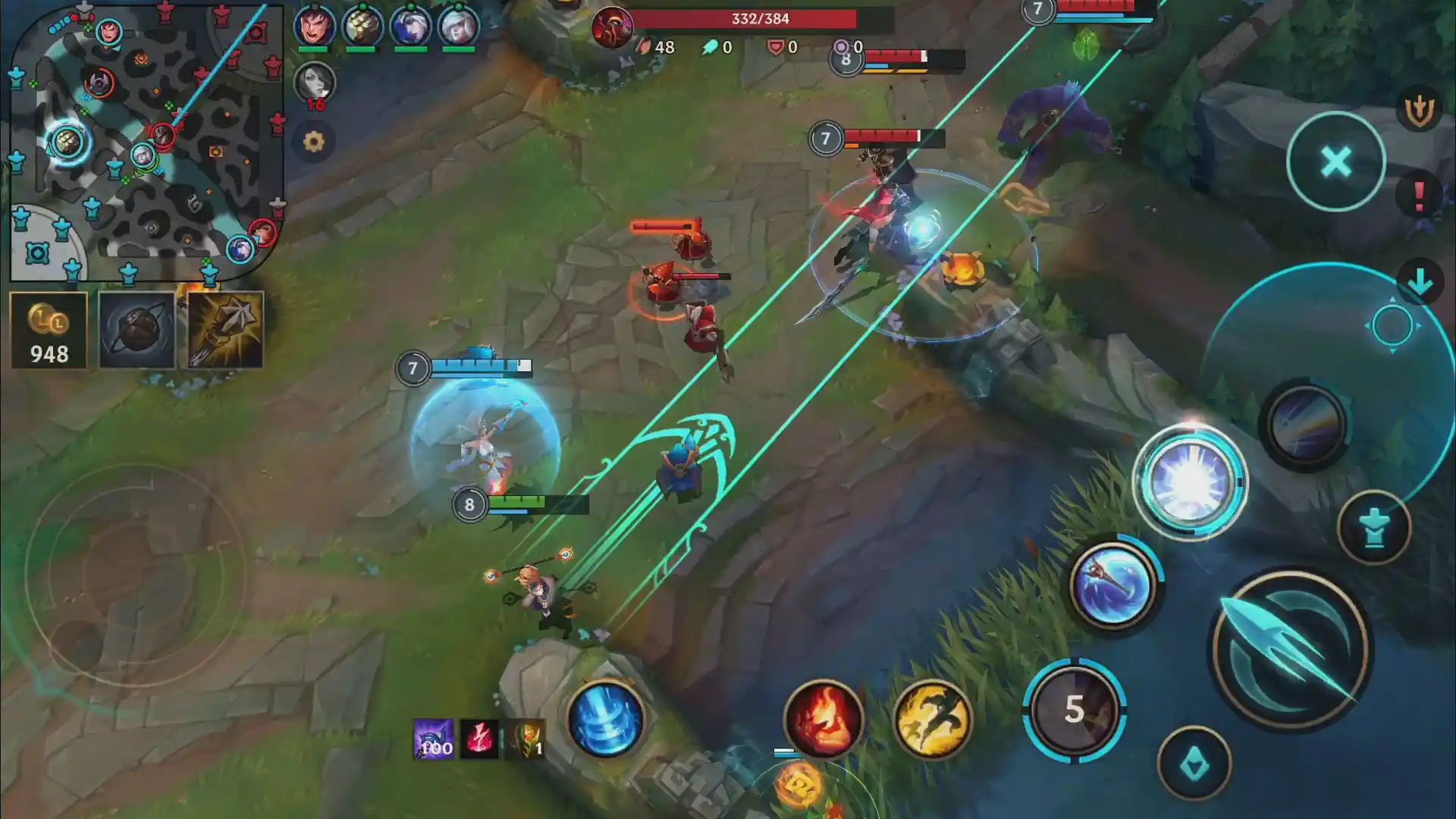
Teamfighting as ADC has three distinct phases, and most beginner mistakes happen because they treat it as one continuous moment instead of three separate decisions.
| Before the Fight | During the Fight | After the First Engage Tools Are Used |
|---|---|---|
| Identify where the safe zone actually is relative to your team’s formation, and confirm you have vision or information on the enemy’s key threats. If you don’t know where the enemy jungler or engage support is, you’re deciding with incomplete information. | Prioritize staying in the safe zone over maximizing damage. It’s tempting to reach for a low-health enemy carry, but stepping into the threat zone to secure one kill often costs you the fight if it gets you killed in return. Target whichever enemy is closest and safely in range rather than the juiciest target across the fight. | This is when you commit. Once the enemy’s hooks, dashes, and initial crowd control have already been spent on someone else, the threat zone shrinks significantly, and this is your window to step forward and deal real damage. |
If your team lacks strong peel, playing slightly passive and entering fights during this third phase, rather than the first, is usually correct even if it feels like you’re contributing less early in the fight.
Itemization: Adapting Instead of Memorizing
Specific item builds shift every patch, which means memorizing one fixed build order is a losing strategy long-term. What stays constant is the decision-making behind adapting your build to the game in front of you.
After your first two or three core items, ask yourself:
- ◆Are you dying to burst damage before you can react? Buy a defensive item earlier than you’d otherwise want. Damage output means nothing if you’re dead before you deal it.
- ◆Is the enemy team stacking healing or lifesteal? An anti-heal item becomes worth prioritizing over pure damage.
- ◆Are enemies building armor to counter you specifically? Armor penetration or percentage-based damage items become more valuable than raw attack damage.
Use current build guides for the default item path on any given patch, since exact numbers and item availability change often, but treat this decision tree as the framework for adjusting when a game isn’t going the way a standard build assumes it will.
How to Climb as ADC
Most stuck ADC players assume they need more damage or better mechanics to climb. In practice, the biggest rank-for-rank difference is death frequency, not damage output.
After every game, ask yourself three questions:
- ◆Which of my deaths happened because I drifted into the threat zone without noticing?
- ◆Did I lose CS or tempo because I mistimed a recall or missed a wave state?
- ◆Did I enter a fight during the wrong phase, before the enemy’s engage tools were used up?
Most players who plateau in low elo aren’t losing to better mechanics; they’re losing to the same one or two decision patterns repeating every game. Fixing the pattern that shows up most often in your own replays will move your rank faster than grinding raw mechanical practice.
Wrapping Up: What to Focus On First

The gap between a new ADC and a consistent one isn’t raw mechanical skill; it’s recognizing danger early enough to act on it. Learn to read the three zones in a fight, build kiting into muscle memory on one champion at a time, and review your deaths honestly after every game. Everything else in the role gets easier once those habits are automatic.