
Video game movies have spent decades getting the games wrong, so the question fans asked about the Resident Evil movie 2026 reboot wasn’t just “is it good?” It was “is this actually Resident Evil?” GamesHarbour looked at what the film keeps, what it deliberately leaves out, and how critics and fans say it measures up. The short version: it doesn’t retell any single game, but it’s built to feel like playing one.
Resident Evil Movie vs Games: What Carries Over and What Doesn’t
The film follows a clear pattern. It borrows the experience of playing Resident Evil rather than the plot, and this table shows where that line falls:
| Element | In the games | In the 2026 film |
|---|---|---|
| Story | Long-running arcs built around Umbrella, Raccoon City, and returning heroes | An original story, not an adaptation of any single game |
| Protagonist | Series heroes like Leon and Jill | Bryan, a medical courier played by Austin Abrams |
| Setting | Raccoon City and its surroundings | Raccoon City, on the periphery of the events of Resident Evil 2 and 3 |
| Gameplay feel | Scavenging, scarce ammo, save typewriters, locked doors | Recreated as props, pacing, and set pieces |
| Legacy characters | Leon S. Kennedy, Jill Valentine, and others | None appear |
| Camera | Fixed third-person and later first-person views | Several shots recreate both styles |
Is the New Resident Evil Movie Based on the Games?
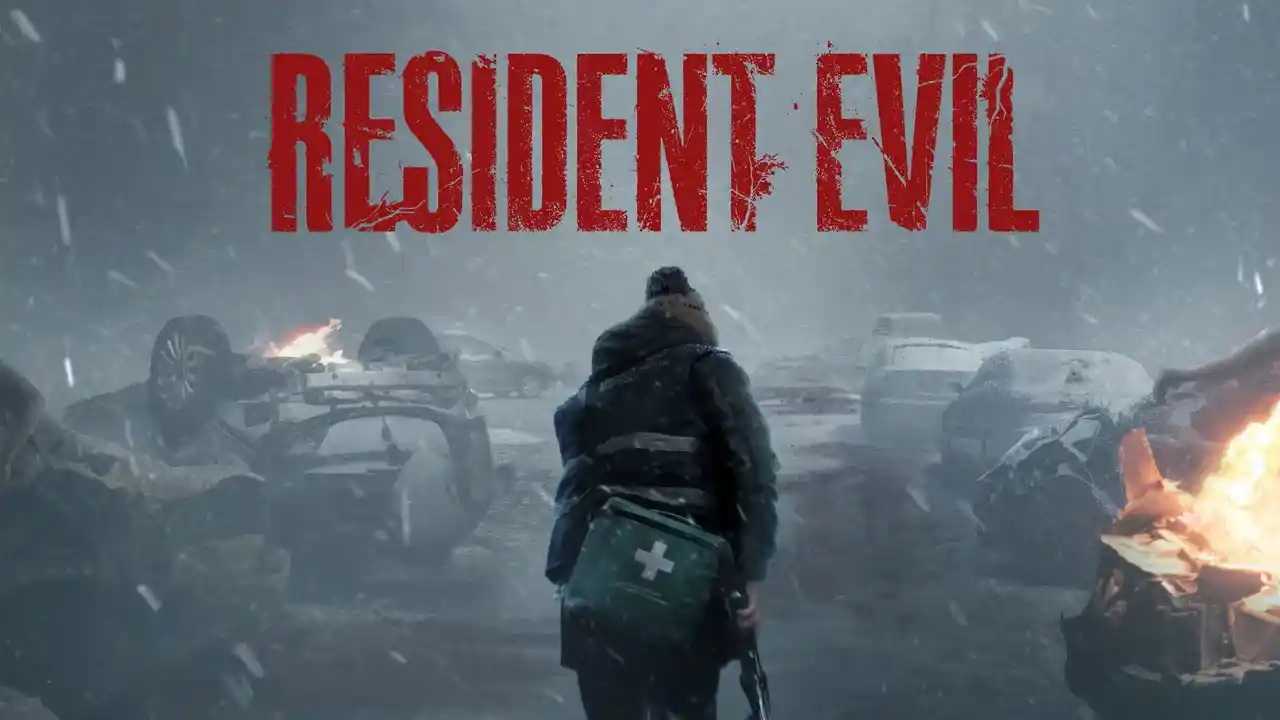
Yes and no. The new Resident Evil movie is based on the franchise, but not on any one game’s story. The Resident Evil movie 2026 release comes from director Zach Cregger, who wrote the script with Shay Hatten, and Sony put it in theaters on September 18, 2026.
Here’s what the story actually covers:
- ◆Protagonist: Bryan (Austin Abrams), a medical courier who transports organs between hospitals
- ◆The job: delivering a container to Raccoon General Hospital in Raccoon City
- ◆The problem: one winter night turns into an outbreak, and Bryan has to survive it
- ◆The approach: little exposition, dropping the audience straight into the chaos
Cregger has been consistent about how the film relates to the games. He has described it as a love letter to them that follows their rules, and in his words, “It is obedient to the lore of the games; it’s just a different story.”
Umbrella and the Cast: Who’s Who in the Film
The cast is small, and it stays close to the games’ lore in one important way: Umbrella is part of the story, not a background detail. Here’s who plays whom:
| Actor | Role | Connection to the games |
|---|---|---|
| Austin Abrams | Bryan, a medical courier | New character, the film’s lead |
| Zach Cherry | Carl, an Umbrella scientist | The corporation behind the outbreaks |
| Paul Walter Hauser | Paul, an Umbrella scientist | The corporation behind the outbreaks |
| Kali Reis | Maxine, an Umbrella enforcer | Umbrella’s muscle on the ground |
| Will Merrick | Dave, an Umbrella scientist | The corporation behind the outbreaks |
| Johnno Wilson | Officer Wilson | Raccoon City law enforcement |
Three of the main roles are Umbrella scientists and one is an enforcer. That matters for faithfulness because the games have always centered on the corporation’s experiments going wrong. The film puts an ordinary courier in the middle of that, which mirrors how many game protagonists stumble into a disaster they didn’t cause.
Resident Evil Movie Leon: Why the Legacy Characters Are Missing
The biggest faithfulness talking point is who isn’t in the film. Cregger chose not to feature Leon S. Kennedy or Jill Valentine, arguing their stories belong in the games and fans already have them. Leon’s story is still being told there, including in Resident Evil Requiem, so the Resident Evil movie Leon debate mostly comes down to whether fans wanted a retelling or something new.
That decision shapes the whole movie:
- ◆No retelling: the film never tries to redo Resident Evil 2 or 3 with new actors
- ◆More freedom: without famous characters to service, Cregger could play with minor enemy types, supply designs, and familiar game tropes
- ◆Fewer deep cuts: the references lean toward mechanics rather than character lore
- ◆A fresh entry point: newcomers don’t need to know who Leon is to follow the story
Collider’s take is that Leon may not appear, but the film has enough nods to keep game fans satisfied.
Game References and Easter Eggs in the Film
This section mentions specific props and scenes from the movie.
Where the film really proves it knows the games is in the details. Here are the references critics flagged most often:
| In the film | What it echoes from the games |
|---|---|
| The green medical bag Bryan carries | The first aid boxes that heal players |
| A typewriter shot framed with deliberate stillness | The series’ iconic save system |
| Bryan stockpiling a handgun, shotgun, and assault rifle | The classic weapon progression, starting unarmed and building up |
| A flashlight used in the snowy wilderness, a sewer, and Raccoon City | In-game flashlights (Bryan never runs out of batteries, unlike players) |
| Shots looking down the barrel of Bryan’s gun | The first-person view of later games |
| Padlocks that keep frustrating Bryan | The games’ locked doors and hidden keys |
| The Revenant | A monster type from the games |
| A vehicle strike early in the story | The opening of Resident Evil 2 |
| A single forced route toward the most dangerous place | The games’ linear level design |
Reviewers noted that these read as cheeky allusions to game mechanics rather than recreations of lore. That’s exactly why several outlets describe the film as adapting the game experience without adapting the game’s story. For another look at how games are reimagining familiar franchises, check out Gundam: Rogue Orbit.
Tone and Style: Does It Feel Like Resident Evil?
Props are easy to copy. Tone is harder, and it’s where viewers say the film does its best work. Here’s how the style breaks down:
- ◆What works: the script keeps exposition minimal and throws viewers into the outbreak, an approach SlashFilm compared to a relentless action film
- ◆What works: one Letterboxd reviewer praised how the filmmaking itself, not just the props, turns the feeling of playing a Resident Evil game into the experience of watching a movie
- ◆What works: the gore is offset by humor, the same tonal swing Cregger used in Barbarian and Weapons
- ◆What divides: another Letterboxd viewer felt the jokes, especially using a monster as a punchline, sometimes undercut the horror
The Zach Cregger Resident Evil script leans on that mix of dread and dark comedy, which is arguably closer to the series’ own campy streak than the po-faced tone of earlier movies.
What Zach Cregger Says About Staying True to the Games
Every Zach Cregger Resident Evil interview lands on the same message: he’s a fan first. Here’s what he has said and done that backs that up:
- ◆He calls himself a devoted follower of the games and says the film doesn’t break their rules
- ◆He told the Hollywood Reporter the script is an original screenplay with nothing to do with the earlier Resident Evil movies
- ◆He has said Leon’s story is already told in the games, so he isn’t retelling it
- ◆He has expressed interest in adapting Resident Evil 7: Biohazard and Resident Evil Village in the future
How It Compares to Earlier Resident Evil Movies
Past films took a very different route, and the difference explains why this one is being called the most faithful yet:
| Film(s) | Approach |
|---|---|
| The six Paul W.S. Anderson-era films (2002–2017) | Mostly original stories with light game ties. The series grossed over $1.2 billion, but most entries received generally negative reviews |
| Welcome to Raccoon City (2021) | A reboot that plugged in game characters and plot directly, which JoBlo argues doesn’t automatically make a great movie |
| Resident Evil (2026) | Original story that keeps the games’ tone, mechanics, and rules without retelling their plots |
A few details of the franchise’s film history put that in context:
- ◆The six earlier films began with the 2002 movie starring Milla Jovovich and Michelle Rodriguez
- ◆George A. Romero was once hired by Sony and Capcom to write and direct a Resident Evil film
- ◆Welcome to Raccoon City was a critical and commercial failure five years before this reboot arrived
- ◆Wikipedia describes the 2026 film as the second reboot, released to widespread critical acclaim
Critical Reception, Fan Reactions, and Box Office
Fans wondering whether faithfulness translated into a good movie have their answer in the numbers. As of this writing:
| Measure | Result |
|---|---|
| Box office | $108.3 million |
| Critical reception | Positive |
| Distinction | Highest-rated film based on a video game on both Rotten Tomatoes and Metacritic |
Here’s how the reaction has shaped up beyond the scores:
- ◆Critics: Rotten Tomatoes reviewers call it a propulsive tribute to the fun and fear of playing a spooky video game, and praise Austin Abrams for giving the film a relatable hero and welcome comic relief
- ◆First reactions: Early screening reactions posted on September 16 called it scary, intense, and fun, with some viewers ranking it among the best video game adaptations ever made
- ◆Big-picture take: JoBlo argues this could be the greatest video game adaptation of all time because it proves you don’t need to adapt a game’s story to be faithful to it
- ◆Dissent: Some viewers say the humor occasionally softens the scares
The Verdict: Faithful in Spirit, Original in Story

So how close is the movie to the games? In plot, not very. In feel, closer than any Resident Evil film before it. In the Resident Evil movie vs games debate, the answer is that it copies the experience, not the storyline.
- ◆Close: tone, dread, scarce resources, game-style props, camera work, Umbrella’s role, and creature design
- ◆Different: the protagonist, the story, and the absence of Leon, Jill, and other legacy characters
- ◆Overall: a love letter to the games rather than a retelling of them
If you want a film that replays Resident Evil 2 beat for beat, this isn’t it. If you want something that captures what it feels like to play one of these games, critics and early audiences say it’s the closest the franchise has come.