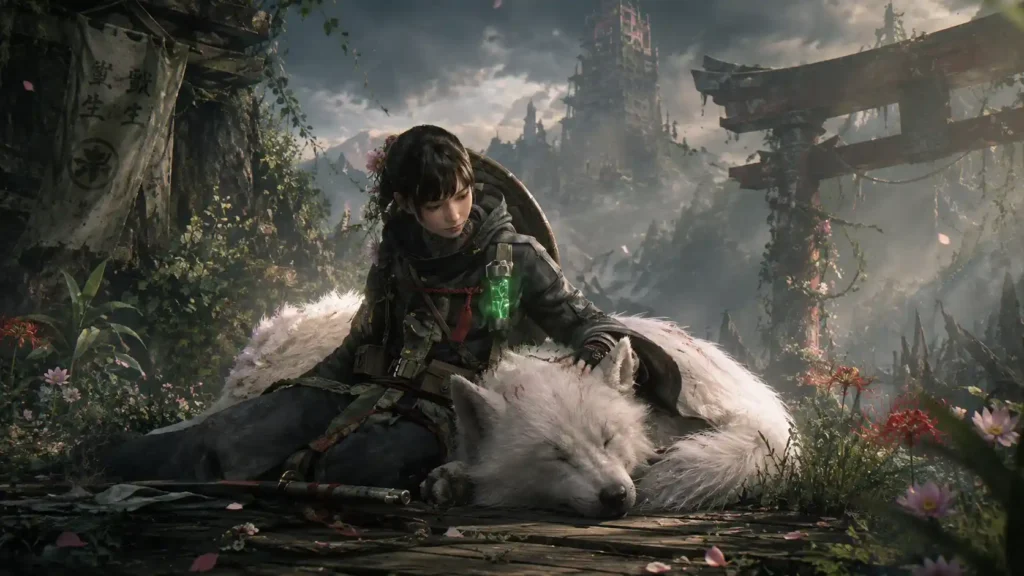
Twenty years is a long time to leave a franchise on the shelf. Capcom didn’t just dust Onimusha off; it handed the series its best reviews in franchise history, including IGN’s first-ever perfect score for the series. GamesHarbour breaks down what Onimusha: Way of the Sword actually gets right, where it stumbles, and whether the wait was worth it.
What Is Onimusha: Way of the Sword?
Onimusha: Way of the Sword is the first new mainline entry in Capcom’s samurai-action series since Onimusha: Dawn of Dreams shipped in 2006.
- ◆Onimusha Way of the Sword release date: September 4, 2026, moved forward three weeks from an original September 25 date after strong public demo feedback
- ◆Platforms: PlayStation 5, Xbox Series X|S, Nintendo Switch 2, and PC via Steam
- ◆Enhancements: PS5 Pro support and Xbox Play Anywhere built in at launch
- ◆Players: single-player only, no co-op or multiplayer modes
This isn’t a continuation of the older Onimusha games’ story either. Way of the Sword stands entirely on its own, with no narrative connection to previous entries or to the 2023 Netflix Onimusha anime. That makes it genuinely accessible to players who never touched the original PS2-era games.
Onimusha Way of the Sword Story
The Onimusha Way of the Sword story follows Musashi Miyamoto, a nod to the real-life Japanese swordsman and military strategist. His in-game appearance is modeled on actor Toshiro Mifune.
After defeating a clan leader in a duel, Musashi is ambushed by an invading force of demonic Genma. He only survives after a mysterious figure grants him an Oni gauntlet.
What separates Musashi from past Onimusha protagonists is motivation. Samanosuke and Jubei Yagyu embraced their Oni powers to save the world. Musashi wants nothing to do with the gauntlet, dragged into the fight rather than volunteering as a hero.
His rival throughout the story is Sasaki Ganryu, a callback to Musashi’s real historical rival. The story unfolds in a fantastical version of Edo-period Kyoto, twisted by malevolent clouds called Malice.
Critics were split on the writing itself. GameRant called Musashi “immediately a fun character” with an “almost Jack Sparrow-like characterization,” and praised the supporting cast, both the figures drawn from real Japanese history and the entirely fictional ones, as the best part of the story. That same review was blunter about the plot itself, concluding “the story itself is not much to write home about.”
Onimusha Way of the Sword Characters
Musashi carries the game almost single-handedly according to critics, but he’s not alone.

- Musashi MiyamotoThe protagonist, guided by a former Onimusha and an Oni inhabiting his gauntlet as he journeys to protect Kyoto
- Sasaki GanryuMusashi’s central rival, drawing on the real historical rivalry between the two swordsmen
- The GenmaDemonic enemies whose designs multiple reviewers singled out as a visual highlight, blending traditional Japanese folklore with body-horror realism
One clarification worth making for longtime fans: there’s no returning cast from the original games. Jean Reno’s likeness, famously used for protagonist Samanosuke in the earliest Onimusha titles, does not appear here. This is a clean break: new hero, new supporting cast, same demonic Genma threat that’s haunted the series since 2001.
Onimusha Way of the Sword Combat

If there’s one thing every single review agrees on, it’s this: the Onimusha Way of the Sword combat system is the reason the revival works at all. GameSpot called parries here executed “like no other game I can recall,” describing weapons locking together with “a palpable heft,” sending sparks flying before Musashi repositions off the enemy’s own momentum.
The core defensive toolkit gives players real options rather than one correct answer:
| Move | What it does |
|---|---|
| Blocking | Safe, but drains Musashi’s stamina over time |
| Parrying | Stricter timing, reverses pressure and builds toward stronger attacks |
| Deflecting | More forgiving than a parry, still requires reading the incoming strike’s direction and rhythm |
| Dodging | Best against wide attacks or bad positioning where a direct contest isn’t worth it |
Chaining parries and deflects builds a meter toward Blazing State, coating Musashi’s katana in blue flame that boosts attack power and increases the souls enemies drop on death. Those souls matter mechanically:
- ◆Yellow souls: refill health
- ◆Red souls: act as currency
- ◆Blue souls: power up Oni Armaments, special weapon abilities that can break enemy guards entirely
Environmental combat adds another layer. Musashi can flip tables into makeshift shields, ram carts into crowds, or parry Genma directly into torches to set them alight.
Despite superficial comparisons, reviewers are clear this isn’t a Soulslike. Director Satoru Nihei has repeatedly stated Way of the Sword isn’t built on Soulslike foundations, and critics who finished the campaign confirm the distinction holds:
- ◆No stamina bar tied to a punishing checkpoint-and-respawn loop
- ◆The parry window is more generous than Sekiro’s
- ◆A Story difficulty mode sits alongside the default Action difficulty
Boss fights are where multiple critics say the game peaks. Gaming Trend called some of Way of the Sword’s major boss encounters strong enough to be “in the discussion for best encounters, even amongst Elden Ring fans.” Giant Bomb described the tension of nailing a fast, specific sequence of parries and dodges under pressure as some of “the most fun and satisfying fights” of the year.
The recurring criticism isn’t the fights themselves; it’s that some lesser bosses get reused multiple times across the campaign, a complaint echoed by several outlets.
Graphics, Performance, and Which Platform to Buy
This is the rare multi-platform launch where no version got the short straw. Digital Foundry’s demo analysis found “no bad version, not even Series S.”
| Platform | Modes | Notes |
|---|---|---|
| PS5 Pro | Quality (30fps) / Performance (60fps+) with Ray Tracing | Exclusive ray-traced reflections, PSSR upscaling, the only console with a 120fps option |
| PS5 / Xbox Series X | Quality (30fps) / Performance (60fps) | The default experience the game was tuned around; RE Engine holds targets consistently |
| Xbox Series S | Performance mode targeting 60fps | Hits its target “a surprising majority of the time” per VGC’s testing |
| Nintendo Switch 2 | Single mode, upscaled, variable 30-40fps | Highest Metacritic score of any platform at 89, despite the lower frame rate ceiling |
| PC | Scalable, modest requirements | Windows 11, 16GB RAM, 50GB SSD storage, DirectX 12; includes Denuvo DRM |
On PS5, reviewers specifically praised the RE Engine’s visual fidelity even in Performance mode, right down to blood dripping realistically off Musashi’s blade rather than sitting flat on the surface. The DualSense controller’s speakers are also used to add extra immersion during combat.
Onimusha Way of the Sword Gameplay: Length and Pacing
This is where the reviews turn from unanimous to genuinely divided.
Multiple critics reported the game’s tight, well-paced core, roughly its first 8 to 9 hours, gets stretched into a 20-to-25-hour campaign through repetition in the back half. One outlet put it bluntly: “nothing in the second half of the game is new, and it’s essentially a gauntlet run through the first 8 or 9 hours again.”
Pixel Twelve’s review echoed the same tension, landing on an 8.5/10 specifically because of this imbalance: “reused enemies, repeat boss appearances, and routine upgrade work make it a longer and less focused” experience “than the swordplay deserves.”
The consistent thread across nearly every review: the combat is strong enough to be the reason to play, and the structure around it is the reason scores didn’t go higher across the board.
Onimusha Way of the Sword Metacritic and Critical Reception
Onimusha: Way of the Sword launched to the best reception the franchise has ever received, and it’s not an isolated win either. Capcom has had a genuinely strong run of critically acclaimed releases in 2026, with Monster Hunter Stories 3 landing similarly high marks earlier in the year.
| Source | Score |
|---|---|
| Metacritic (overall) | 86, “generally favorable” |
| Metacritic (Switch 2) | 89, the highest-scored platform |
| OpenCritic | 94% critic recommendation |
| IGN | 10/10, first-ever perfect score in franchise history |
| Pixel Twelve | 8.5/10 |
Critic sentiment lines up cleanly with everything covered above: the combat is unanimously praised, the boss design is a genuine highlight, and the pacing and repetition in the campaign’s back half is the recurring, consistent criticism holding otherwise glowing reviews back from a perfect score.
Onimusha Way of the Sword Release Date, Editions, and Pricing

Way of the Sword shipped in three editions, all available worldwide on day one:
| Edition | Price | What you get |
|---|---|---|
| Standard | $69.99 | Base game |
| Deluxe | $79.99 | Base game + cosmetic kit + stat-boosting charms |
| Premium Deluxe | $89.99 | Everything in Deluxe + more outfits, a haori, and a mini digital soundtrack |
Pre-order bonuses were identical across all three editions:
- ◆Standard tier bonus: Charm: Lion Dog (an equippable charm that strengthens Musashi) and Sword Appearance: Sealed Curse (a cosmetic sword skin)
- ◆Deluxe and Premium Deluxe bonus: everything above, plus Charm: White Monkey and Sword Appearance: White Lion
Because Capcom moved the release date up by three weeks, the original digital pre-order bonus became what Capcom calls an “Early Adopter Bonus.” Buyers can still claim it for a limited period even after the September 4 launch.
A free Onimusha Way of the Sword demo was also made available on PS5, Xbox, and PC ahead of launch. Saving your demo progress unlocked an exclusive in-game charm carried over into the full release.
Is Onimusha: Way of the Sword Worth Playing?

The verdict critics landed on is remarkably consistent: this is the best-reviewed Onimusha game ever made, and it earns that reputation almost entirely on the strength of its combat.
Parries with real weight. Deflects that reward pattern-reading over panic. Boss fights some critics rank alongside Elden Ring’s best. All of it delivers on what a 20-year comeback needed to prove.
Where it falls short is structure. A tight, focused 8-to-9-hour core gets stretched by repetition into a much longer campaign, recycling bosses and padding pacing in ways multiple reviewers flagged as the game’s clearest weakness.
If you came for tense, cinematic swordplay and can tolerate a second half that leans on what worked in the first, Way of the Sword delivers one of the best combat systems in any action game this year. If pacing and structural variety matter more to you than combat depth alone, temper expectations for the back half accordingly.